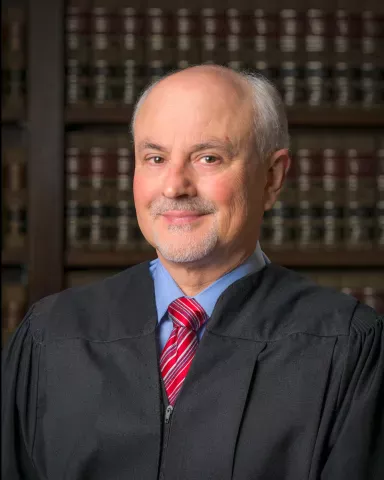
Judge James Donato
Individual Rules, Standing Orders & Policies
- Rules last changed:

Limits & Logistics
Document Limits
Courtesy Copies
Complaint, Notice Of Removal, Case Management Conference Statement, Stipulation, Motion, Opening Brief, Opposition Brief, Reply Brief, Declaration, Exhibit, Discovery Dispute Letter
- 1 copy • Hand Delivery • Upon Filing
Discovery Dispute Letter
- Upon Filing
Pretrial Documents
- 2 copies • Hand Delivery • Within 24 Hours
Binding: Three Hole Punched

Adjournments
- Request for more than ten terms requires good cause demonstration and must be filed two weeks before joint statement deadline.
- Settlements 'in principle' do not justify removing case from calendar or moving trial dates; only a court-approved continuance will release parties from proceeding.
- Longer pretrial periods require justification at initial conference.
- Trial dates assigned at initial conference are not changed absent good cause.
Request must include
- Reschedule requests must be in writing 10 days in advance with good cause.

Communication
Phone
Chambers
Chambers
Letter via ECF
Chambers
Letter via fax
Clerk
Page & Word Limits10 rules
Machine summary. Not checked yet.Mandatory?
If more than ten terms are submitted for construction without leave of court, the Court will construe only the first ten terms listed in the joint claim construction statement and sanctions may be imposed.
Summary: Court will construe only first ten terms without leave and may impose sanctions.
Structured details unavailable. See the source text.
Machine summary. Not checked yet.Mandatory?
As an initial matter, the Court will generally construe no more than ten terms. If multiple terms present identical issues, they may be grouped together or a representative term may be chosen, and each group or representative term may be considered a single term for purposes of the ten-term limit.
Summary: Court will generally construe no more than ten terms, with grouping allowed for identical issues.
Structured details unavailable. See the source text.
Machine summary. Not checked yet.Mandatory?
Claim construction briefs must address each disputed term, but only those that are truly disputed, following the order of the joint statement. The opening and opposition briefs may not exceed 20 pages; the reply brief may not exceed 10 pages.
Summary: Opening and opposition briefs limited to 20 pages; reply brief limited to 10 pages.
Claim Construction Brief
20 pages
Applies to: Attorney
Machine summary. Not checked yet.Mandatory?
Each party will serve and file a trial brief, not to exceed 10 pages, specifying each cause of action and defense remaining to be tried along with a statement of the applicable legal standard.
Summary: Trial briefs are limited to 10 pages.
Trial Brief
10 pages
Applies to: Attorney
Machine summary. Not checked yet.Mandatory?
No brief in support or opposition of a motion in limine may exceed 3 pages in length, and proposed orders need not be prepared. Reply briefs are not permitted.
Summary: Motions in limine briefs limited to 3 pages for support/opposition; reply briefs not permitted.
Structured details unavailable. See the source text.
Machine summary. Not checked yet.Mandatory?
For summary judgment and class certification motions, opening and opposition briefs may not exceed 25 pages, and reply briefs may not exceed 15 pages.
Summary: Page limits for summary judgment and class certification: 25/15 pages for opening/opposition, 15 pages for reply
Opening Brief
25 pages
Applies to: Attorney
Opposition Brief
25 pages
Applies to: Attorney
Reply Brief
15 pages
Applies to: Attorney
Machine summary. Not checked yet.Mandatory?
Except for summary judgment and class certification motions, opening and opposition briefs may not exceed 15 pages, and reply briefs may not exceed 10 pages. For summary judgment and class certification motions, opening and opposition briefs may not exceed 25 pages, and reply briefs may not exceed 15 pages.
Summary: Page limits: 15/10 pages for most motions, 25/15 pages for summary judgment and class certification
Opening Brief
15 pages
Applies to: Attorney
Reply Brief
10 pages
Applies to: Attorney
Opposition Brief
15 pages
Applies to: Attorney
Machine summary. Not checked yet.Important?
Following each set of competing versions of a disputed instruction, each party may explain, in no more than two pages, why the Court should give that party’s proposed instruction. Any party taking the position that an instruction should not be given at all may submit a two-page explanation of its position in lieu of a counter-version.
Summary: Each party may submit up to 2 pages explaining why its proposed jury instruction should be given; a party opposing an instruction may submit a 2-page explanation.
Jury Instruction Explanation
2 pages
Applies to: Attorney
Machine summary. Not checked yet.Important?
If the parties disagree on any proposed question, the disagreement should be noted and explained, in no more than one page per party.
Summary: Disagreements on voir dire questions must be explained in no more than one page per party.
Voir Dire Explanation
1 pages
Applies to: Attorney
Machine summary. Not checked yet.Note?
The parties should agree on a trial date and work backward from that date to ensure adequate time for dispositive and Daubert motions, class certification motions, expert discovery and other events. As a general rule, counsel should budget no more than 18 months between the initial case management conference and trial.
Summary: 18-month limit between initial conference and trial.
Structured details unavailable. See the source text.
Document Format Requirements7 rules
Machine summary. Not checked yet.Mandatory?
The parties must provide two sets of all trial exhibits -- double-sided and three-hole-punched in three-ring binders, with each exhibit tagged and separated by a label divider identifying the exhibit number. These sets must be delivered to the Court on the morning of the first day of trial.
Summary: Parties must deliver two sets of trial exhibits, double-sided, three-hole-punched, in three-ring binders, with tagged and labeled dividers, on the morning of the first day of trial.
Machine summary. Not checked yet.Mandatory?
All chambers copies must be double-sided, three-hole punched at the left margin and marked with the ECF stamp (case number, document number, date and page number). These printed copies should be marked “Chambers Copy -- Do Not File” and placed in an envelope clearly labeled with the judge’s name and case number.
Summary: Chambers copies must be double-sided, three-hole punched, ECF stamped, and marked 'Chambers Copy -- Do Not File'
Machine summary. Not checked yet.Important?
The parties must e-mail a Microsoft Word version of the proposed jury instructions and verdict form to jdpo@cand.uscourts.gov by noon the day after the pretrial filings due date.
Summary: Proposed jury instructions and verdict form must be in Microsoft Word format.
DOCX
Machine summary. Not checked yet.Important?
A Microsoft Word version of the proposed voir dire questions should be e-mailed to jdpo@cand.uscourts.gov by noon the day after the pretrial filings due date.
Summary: Proposed voir dire questions must be in Microsoft Word format.
DOCX
Machine summary. Not checked yet.Important?
Each exhibit shall be tagged in the following form: UNITED STATES DISTRICT COURT NORTHERN DISTRICT OF CALIFORNIA TRIAL EXHIBIT 100 CASE NO. _____________________ DATE ENTERED_________________ BY __________________________ DEPUTY CLERK The tag should be placed on or near the lower right-hand corner or, if a photograph, on the back. Counsel should fill in the case number but leave the last two spaces blank.
Summary: Each exhibit must be tagged with a specific form, placed on the lower right-hand corner or back of photograph, with case number filled in leaving last two spaces blank.
Machine summary. Not checked yet.Note?
Each notebook will be a 1-inch three-ring black binder with a plastic slip pocket on the cover. Each binder should have a title page inserted in the slip pocket with the name and case number of the action in large print. Inside the binder, the parties will provide 50 pages of lined notepaper clipped into the rings. The parties should consider including a glossary.
Summary: Jury notebooks must be 1-inch three-ring black binder with plastic slip pocket, title page with case name and number, 50 pages of lined notepaper, and consider including a glossary.
Machine summary. Not checked yet.Note?
For voluminous filings, chambers would appreciate the use of binder clips rather than staples, or submission in three-ring binders. For documents with multiple attachments (e.g., declarations with exhibits, requests for judicial notice and so on), please use side tabs that clearly separate each attached document.
Summary: For voluminous filings, use binder clips or three-ring binders; use side tabs for multiple attachments
Document Filing Requirements38 rules
Machine summary. Not checked yet.Mandatory?
Parties must attach to the joint claim construction statement copies of all patents in dispute. Parties must also make a complete prosecution history for each patent available to the Court upon request.
Summary: Joint statement must include copies of all patents in dispute and complete prosecution history available upon request.
Document Type
Joint Claim Construction Statement
Machine summary. Not checked yet.Mandatory?
For any term in dispute, the parties must agree on the identity of the term. With regard to disputed terms, phrases, or clauses, the joint statement will list each disputed term, phrase, or clause (listed by claim); each party’s proposed construction; and support for each party’s proposed construction side by side.
Summary: Joint statement must list disputed terms by claim with each party's proposed construction and support.
Document Type
Joint Claim Construction Statement
Machine summary. Not checked yet.Mandatory?
The initial joint claim construction statement required by Patent Local Rule 4-3 must be truly joint. Disputed terms, phrases, and clauses must be designated as disputed. All other terms will be presumed to be undisputed.
Summary: Joint claim construction statement must designate disputed terms and be truly joint.
Document Type
Joint Claim Construction Statement
Machine summary. Not checked yet.Mandatory?
While the Court encourages the parties to negotiate mutually agreeable constructions, the parties may not propose new constructions for the first time in reply briefs or other filings that do not afford the opposing party an opportunity to respond.
Summary: New constructions cannot be proposed for first time in reply briefs or filings without opportunity for response.
Document Type
Reply Brief
Machine summary. Not checked yet.Mandatory?
If for some exceptional reason a party needs to propose a different construction in its brief than that found in the joint claim construction statement, that party must submit a short request for consideration to the Court that clearly sets forth the new construction and explains the basis for the change.
Summary: Request required to propose different construction in brief than in joint statement, with explanation of basis.
Document Type
Claim Construction Brief
Machine summary. Not checked yet.Mandatory?
At the time of filing the reply briefs, the parties shall file an amended, final joint claim construction statement if there has been any change in the parties’ claim construction positions, including in the amended statement only the remaining disputed terms, phrases, and clauses.
Summary: Amended final joint claim construction statement required with reply briefs if positions have changed.
Document Type
Reply Brief
Machine summary. Not checked yet.Mandatory?
If a tutorial is scheduled, each party should file a written technology synopsis that provides, in plain and accessible language, background information about the technology and science to be discussed at the tutorial. The synopsis is due at least 7 court days before the tutorial, and should not exceed 12 pages. Do not include a rewrite of any portion of the patent or claim construction statements, or argument on any legal issue such as invalidity, infringement, patentability and so on. The synopsis should be a neutral overview of the technology related to the tutorial.
Summary: Technology synopsis (max 12 pages) due 7 court days before tutorial, neutral overview only.
Document Type
Technology Synopsis
Machine summary. Not checked yet.Mandatory?
Each party will serve and file a trial brief, not to exceed 10 pages, specifying each cause of action and defense remaining to be tried along with a statement of the applicable legal standard.
Summary: Trial brief must specify each cause of action and defense and include applicable legal standard.
Document Type
Trial Brief
Machine summary. Not checked yet.Mandatory?
The parties will file a joint pretrial statement, signed and vetted by all lead trial counsel, that contains the following information: i. Substance of the Action: A brief description of the substance of the claims and defenses which remain to be decided. ii. Relief Requested: A statement of all relief sought, itemizing all elements of damages claimed. iii. Undisputed Facts: A statement of all relevant undisputed facts to which the parties will stipulate for incorporation into the trial record without the necessity of supporting testimony or exhibits. iv. Disputed Factual Issues: A statement of all relevant disputed facts that remain to be decided. v. Disputed Legal Issues: Without extended legal argument, a brief statement of disputed points of law concerning liability and relief. vi. Stipulations: A statement of stipulations requested or proposed. vii. Bifurcation: A statement of whether bifurcation or a separate trial of specific issues is feasible and desired. viii. Settlement: A statement summarizing the status of settlement negotiations and indicating whether further negotiations are likely to be productive. ix. Estimate of trial length: An estimate of the total length of the trial.
Summary: Joint pretrial statement must contain nine specified sections and be signed by all lead trial counsel.
Document Type
Joint Pretrial Statement
Machine summary. Not checked yet.Mandatory?
each addressing a single specific evidentiary issue
Summary: Each motion in limine must address a single specific evidentiary issue.
Document Type
Motion In Limine
Machine summary. Not checked yet.Mandatory?
Motions in limine may not be used to request summary judgment or raise Daubert challenges unless the Court has specifically granted prior approval.
Summary: Motions in limine cannot be used for summary judgment or Daubert challenges without prior court approval.
Document Type
Motion In Limine
Machine summary. Not checked yet.Mandatory?
The parties must jointly file by the pretrial filings due date two separate charts of proposed documentary exhibits, with one chart summarizing those exhibits that the parties agree are admissible and another chart summarizing those exhibits for which admissibility is disputed. The chart of disputed exhibits must identify the objecting party and include succinct summaries of the objection and the response, with authority that supports the parties’ respective positions. Both charts must also include the following information as to all exhibits: (1) exhibit number; (2) name or brief description of the exhibit; and (3) the exhibit’s purpose and sponsoring witness.
Summary: Parties must jointly file two exhibit charts by the pretrial filings due date: one for agreed exhibits and one for disputed exhibits, with specific content requirements.
Document Type
Exhibit List
Machine summary. Not checked yet.Mandatory?
The parties must file by the pretrial filings due date a joint list of all witnesses who are likely to be called at trial (other than solely for impeachment or rebuttal purposes), including a brief statement describing the substance of the testimony to be given by each witness and an estimate of minutes or hours the witness’s testimony is expected to take (direct and cross).
Summary: Parties must file a joint witness list by the pretrial filings due date, including substance of testimony and time estimate.
Document Type
Witness List
Machine summary. Not checked yet.Mandatory?
Before the closing arguments, counsel must confer with the Courtroom Deputy to make sure the exhibits in evidence are in good order. Counsel must jointly provide a revised list of all exhibits actually in evidence (and no others), stating the exhibit number and a brief, non-argumentative description (e.g., letter from A.B. Case to D.E. Frank, dated August 17, 1999). This joint list will go into the jury room to help the jury sort through exhibits in evidence.
Summary: Before closing arguments, counsel must jointly provide a revised list of all exhibits in evidence with exhibit number and brief description.
Document Type
Exhibit List
Machine summary. Not checked yet.Mandatory?
If a plea is being entered pursuant to a plea agreement, counsel for the government shall deliver a copy of the plea agreement to chambers on the 19th Floor in San Francisco by 10:00 a.m. the day before the plea is to be entered. If the plea is not pursuant to a plea agreement or if the specifics of the agreement are not yet finalized, counsel for the defendant shall notify the Courtroom Deputy of the entry of an open plea, and shall deliver a copy of the application for entry of plea to chambers by 10:00 a.m. the day before the plea is to be entered.
Summary: Plea agreement or open plea notification required by 10:00 AM day before plea.
Structured details unavailable. See the source text.
Machine summary. Not checked yet.Mandatory?
The parties must file a joint case management statement addressing the standardized items required by the Standing Order for All Judges of the Northern District of California: Contents of Joint Case Management Statements. The joint statement must be filed at least seven calendar days prior to the case management conference.
Summary: Joint case management statement must be filed 7 days before conference.
Document Type
Joint Case Management Statement
Machine summary. Not checked yet.Mandatory?
For parties with counsel, each party must be represented at the case management conference by lead counsel prepared to address all pertinent matters and with authority to enter stipulations and make admissions.
Summary: Lead counsel must attend with authority to stipulate and admit.
Document Type
Case Management Conference
Machine summary. Not checked yet.Mandatory?
Pursuant to Federal Rule Civil Procedure 26(d)(1), formal discovery should not be served or initiated by any party until after the parties have conferred as required by FRCP 26(f), except by stipulation or court order, or as provided for in FRCP 26(d)(2) or other rules.
Summary: Formal discovery cannot begin until after Rule 26(f) conference.
Document Type
Discovery
Machine summary. Not checked yet.Mandatory?
All submissions filed with the Court must include the date and time of the hearing or conference on the cover sheet.
Summary: All submissions must include hearing/conference date and time on cover sheet
Structured details unavailable. See the source text.
Machine summary. Not checked yet.Mandatory?
On summary judgment motions, joint statements of undisputed facts are not required but are helpful if completely agreed upon. Separate statements of “undisputed facts” may not be filed. See Civil L.R. 56-2.
Summary: Joint statements of undisputed facts not required but helpful on summary judgment motions; separate statements not permitted
Document Type
Summary Judgment Motion
Machine summary. Not checked yet.Mandatory?
The parties are reminded that they must inform the Court of any potentially related actions pending in this District or any other federal or state court in accordance with Civil Local Rules 3-12 and 3-13.
Summary: Parties must inform Court of potentially related actions in this District or other federal/state courts
Document Type
All Submissions
Machine summary. Not checked yet.Mandatory?
The letter to the Court must attach an excerpt of the disputed discovery request and the corresponding, served response. No other documents shall be attached or provided pending further order by the Court.
Summary: Discovery dispute letters must attach the disputed discovery request and response, and no other documents.
Document Type
Discovery Dispute Letter
Machine summary. Not checked yet.Important?
The parties must file a joint set of proposed jury instructions, arranged in the order the parties propose the Court give the instructions. The parties should use the Ninth Circuit Model Jury Instructions to the fullest extent possible. Modifications and “custom” proposed instructions are discouraged. If offered, they should be clearly identified as such.
Summary: Parties must file a joint set of proposed jury instructions, using Ninth Circuit Model instructions where possible, and clearly identify any modifications.
Document Type
Jury Instructions
Machine summary. Not checked yet.Important?
Undisputed instructions must be identified as “Stipulated Instruction No. __ Re __________,” with the blanks filled in as appropriate. For disputed instructions, each party’s proposed version must be provided and identified as, “Disputed Instruction No. __ Re _________ Offered by __________,” with the blanks filled in as appropriate. All proposed versions of the same instruction should bear the same number.
Summary: Undisputed instructions must be labeled 'Stipulated Instruction No. __ Re __________'; disputed instructions must be labeled 'Disputed Instruction No. __ Re _________ Offered by __________'; all versions of same instruction bear same number.
Document Type
Jury Instructions
Machine summary. Not checked yet.Important?
The parties must also file a joint proposed verdict form, using the same process.
Summary: Parties must file a joint proposed verdict form using the same process as jury instructions.
Document Type
Verdict Form
Machine summary. Not checked yet.Important?
The parties should not submit proposed preliminary instructions, which the Court will do on its own in a draft to which the parties may propose modifications.
Summary: Parties should not submit proposed preliminary instructions; the Court will prepare a draft.
Document Type
Preliminary Instructions
Machine summary. Not checked yet.Important?
If the parties would like the Court to consider particular voir dire questions, they should file a joint set of proposed questions. There is no need to include basic background questions such as name, occupation, education and so on. The Court has standard questions prepared on those topics.
Summary: Parties may file a joint set of proposed voir dire questions; basic background questions are not needed.
Document Type
Voir Dire Questions
Machine summary. Not checked yet.Important?
To avoid any party claiming "ownership" of an exhibit, all exhibits shall be marked and referred to as "Trial Exhibit No. __," and not as "Plaintiff's Exhibit" or "Defendant's Exhibit."
Summary: Exhibits must be marked and referred to as 'Trial Exhibit No. __' rather than by party designation.
Document Type
Exhibits
Machine summary. Not checked yet.Important?
The procedures for disclosure and discovery set forth in the Local Criminal Rules, in particular Criminal Local Rule 16-1, and the Federal Rules of Criminal Procedure will be strictly enforced.
Summary: Criminal discovery procedures strictly enforced per Local Rule 16-1 and Federal Rules.
Document Type
Discovery
Machine summary. Not checked yet.Important?
Failure to file a joint statement must be accompanied by a signed declaration explaining the grounds for that failure. Absent good cause, the parties may be subject to sanctions.
Summary: Failure to file joint statement requires declaration and may result in sanctions.
Document Type
Joint Case Management Statement
Machine summary. Not checked yet.Important?
Failure of lead counsel to appear may result in sanctions.
Document Type
Case Management Conference
Machine summary. Not checked yet.Important?
The title of a submission must be sufficiently descriptive to alert the Court to the relief sought; for example, please do not bury a request for continuance in the body of a memorandum.
Summary: Submission titles must be sufficiently descriptive of the relief sought
Document Type
All Submissions
Machine summary. Not checked yet.Important?
The signature block of the letter should identify which party counsel represents.
Summary: Signature block of discovery dispute letter must identify which party counsel represents.
Document Type
Discovery Dispute Letter
Machine summary. Not checked yet.Important?
After the telephone conference or hearing, if any, counsel should submit their proposed order (agreed as to form) by e-filing it.
Summary: After discovery dispute conference or hearing, counsel must submit a proposed order agreed as to form.
Document Type
Proposed Order
Machine summary. Not checked yet.Note?
No brief in support or opposition of a motion in limine may exceed 3 pages in length, and proposed orders need not be prepared. Reply briefs are not permitted.
Summary: Proposed orders are not required for motions in limine.
Document Type
Motion In Limine
Machine summary. Not checked yet.Note?
Although the parties are not required to file a Sentencing Memorandum except as set forth in Criminal Local Rule 32-5(b), the Court encourages the parties to submit a Sentencing Memorandum.
Summary: Sentencing Memoranda encouraged but not required.
Document Type
Sentencing Memorandum
Machine summary. Not checked yet.Note?
For parties without counsel, the party is expected to appear.
Summary: Pro se parties must appear at case management conference.
Document Type
Case Management Conference
Machine summary. Not checked yet.Note?
The Court expects that as soon as any party reasonably anticipates or knows of litigation, it will take the
Summary: Parties must take action upon reasonable anticipation of litigation.
Document Type
Litigation Anticipation
Filing & Service rules
Electronic Filing Rules
Parties must e-mail Microsoft Word version of proposed jury instructions and verdict form to jdpo@cand.uscourts.gov.
The parties must e-mail a Microsoft Word version of the proposed jury instructions and verdict form to jdpo@cand.uscourts.gov by noon the day after the pretrial filings due date.
Machine summary. Not checked yet. · Civil cases
Page 3 | Proposed Jury Instructions And Verdict Forms
Parties must e-mail Microsoft Word version of proposed voir dire questions to jdpo@cand.uscourts.gov.
A Microsoft Word version of the proposed voir dire questions should be e-mailed to jdpo@cand.uscourts.gov by noon the day after the pretrial filings due date.
Machine summary. Not checked yet. · Civil cases
Page 4 | Voir Dire
Proposed order must be e-filed after discovery dispute conference or hearing.
After the telephone conference or hearing, if any, counsel should submit their proposed order (agreed as to form) by e-filing it.
Machine summary. Not checked yet. · Civil cases
Page 7 | Paragraph 20
Discovery dispute letters and cancellation letters must be electronically filed.
The letter should be electronically filed, as should a timely letter cancelling any conference or hearing scheduled by the Court if settlement is reached.
Machine summary. Not checked yet. · Civil cases
Page 7 | Paragraph 20
Filing Timing and Cure Windows
Pretrial documents must be filed no later than 14 days before the final pretrial conference.
The parties must file these pretrial documents no later than 14 days before the final pretrial conference (this date will be referred to as "the pretrial filings due date").
Machine summary. Not checked yet. · Civil cases
Page 1 | PRETRIAL FILINGS
Email Microsoft Word version of proposed jury instructions and verdict form to jdpo@cand.uscourts.gov by noon the day after the pretrial filings due date.
The parties must e-mail a Microsoft Word version of the proposed jury instructions and verdict form to jdpo@cand.uscourts.gov by noon the day after the pretrial filings due date.
Machine summary. Not checked yet. · Civil cases
Page 3 | Proposed Jury Instructions And Verdict Forms
Email Microsoft Word version of proposed voir dire questions to jdpo@cand.uscourts.gov by noon the day after the pretrial filings due date.
A Microsoft Word version of the proposed voir dire questions should be e-mailed to jdpo@cand.uscourts.gov by noon the day after the pretrial filings due date.
Machine summary. Not checked yet. · Civil cases
Page 4 | Voir Dire
Parties must jointly file deposition excerpts and discovery responses to be offered at trial no later than 5 days before trial; counter-designations and objections due same deadline.
Unless otherwise ordered, no later than 5 days before trial is set to begin, the parties must jointly file all excerpts of deposition testimony or other discovery responses that will be offered by any party at trial for any reason other than impeachment or rebuttal. The parties must meet and confer about these designations no later than 21 days before trial. By the 5-day-before-trial deadline, each party must also submit any counter-designations or objections it may have to the deposition testimony or discovery designated by any other party. The Court strongly favors use of deposition videos over reading a transcript in court.
Machine summary. Not checked yet. · Civil cases
Page 7 | paragraph 32
Parties should settle no later than 24 hours before jury pool appears or before close of business Friday; late settlement may result in jury cost sanctions.
Counsel should try to resolve or settle cases no later than 24 hours before the jury pool is called to the courthouse and before the close of business on a Friday. Civil Local Rule 40-1 provides that jury costs may be assessed as sanctions for failure to provide the Court with timely written notice of a settlement. If a case settles less than 24 hours before the jury pool is scheduled to appear, or over the weekend before a Monday trial call, the parties will be required to pay the Court's jury costs (typically the per diem and mileage for each member of the jury pool) in equal shares in addition to any agreed-upon settlement amounts.
Machine summary. Not checked yet. · Civil cases
Page 9 | SETTLEMENTS AND CONTINUANCES
Service and Proof of Service Rules
Motions in limine moving papers must be served (not filed) at least 14 days before the pretrial filings due date.
At least 14 days before the pretrial filings due date, counsel must serve, but not file, the moving papers.
Machine summary. Not checked yet. · Civil cases
Page 2 | PRETRIAL FILINGS
Responding party must serve oppositions to pretrial motions at least 4 days before the pretrial filings due date.
At least 4 days before the pretrial filings due date, the responding party must serve, but not file, the oppositions.
Machine summary. Not checked yet. · Civil cases
Page 3 | Motions In Limine
Courtesy Copy Requirements
Two three-hole punched, double-sided chambers copies of pretrial materials must be delivered to the Clerk's office by noon the day after filing.
Two three-hole punched, double-sided chambers copies of these materials must be delivered to the Clerk's office by noon the day after filing.
Machine summary. Not checked yet. · Civil cases
Page 1 | PRETRIAL FILINGS
Chambers copies required for all electronically filed documents with specific formatting.
The parties are required to lodge for chambers one paper copy of each document that is filed electronically. All chambers copies must be three-hole punched at the left margin and marked with the ECF stamp (case number, document number, date and page number). These printed copies shall be marked "Chambers Copy -- Do Not File" and placed in an envelope clearly labeled with the judge's name and case number. All chambers copies must be submitted to this Court's San Francisco chambers; please do not deliver chambers copies to the Oakland Courthouse.
Machine summary. Not checked yet. · Criminal cases
Page 2 | SCHEDULING
Chambers copies required for specific document types including motions, briefs, and discovery dispute letters
In addition to filing papers electronically, the parties are required to lodge for chambers one paper copy of the following: (a) complaints; (b) notices of removal; (c) case management conference statements; (d) stipulations; (e) all motion papers, including the opening, opposition, and reply briefs, as well as any supporting declarations and exhibits; and (f) discovery dispute letters that are filed pursuant to this Court’s Standing Order for Discovery in Civil Cases.
Machine summary. Not checked yet. · Civil cases
Page 3 | ELECTRONIC CASE FILING − CHAMBERS COPIES
Filing party must submit chambers copies of discovery dispute letters as per the Standing Order for Civil Cases.
(Please note that the filing party must submit chambers copies of these letters as explained in this Court's Standing Order for Civil Cases.)
Machine summary. Not checked yet. · Civil cases
Page 7 | Paragraph 20
Sealing & Redaction Procedures
Sealed documents filed with Oakland Clerk's Office; chambers copy to San Francisco.
Parties seeking to file a document under seal must follow the procedures required by the Criminal Local Rules. All documents under seal should be lodged with the Oakland Clerk's Office. The parties shall, however, submit a chambers copy of the documents under seal directly to this Court's San Francisco chambers in accordance with the above provision on chambers copies.
Machine summary. Not checked yet. · Criminal cases
Page 2 | SEALED DOCUMENTS
Combined motion to seal must identify superseded prior motions.
The later combined motion to seal that is filed should clearly identify the docket numbers of the prior motions to seal that are superseded by the combined motion.
Machine summary. Not checked yet. · Civil cases
Page 7 | SEALING PROCEDURES
Declarations claiming confidentiality to non-parties must be served on those non-parties.
Any declaration, whether under Civil Local Rule 79-5(d)(1)(A) or (e)(1), that claims confidentiality obligations to a non-party as a basis for sealing a document or a portion of a document must be served on the non-party as set forth in Civil Local Rule 79-5(e).
Machine summary. Not checked yet. · Civil cases
Page 7 | SEALING PROCEDURES
Sealed document portions must be clearly marked on unredacted versions.
All portions of documents sought to be sealed must be clearly marked on the unredacted versions of documents submitted to the Court, as required by Civil Local Rule 79-5(d)(1)(D). The Court emphasizes this requirement, because it is usually ignored.
Machine summary. Not checked yet. · Civil cases
Page 7 | SEALING PROCEDURES
Failure to follow combined motion procedure results in denial without prejudice.
If the Court determines that the parties should have followed this procedure but did not, it will deny the motions to seal without prejudice.
Machine summary. Not checked yet. · Civil cases
Page 7 | SEALING PROCEDURES
Non-parties have 4 days from declaration service to file their own declaration.
The non-party must also be notified that it must comply with the procedures set forth in that rule for Designating Parties, except that the non-party will have four days from service of the declaration -- rather than four days from the filing of the administrative motion to seal -- to file a declaration under Civil Local Rule 79-5(e)(1).
Machine summary. Not checked yet. · Civil cases
Page 7 | SEALING PROCEDURES
Must identify 'good cause' or 'compelling reasons' standard and provide specific reasons for sealing.
The 'strong presumption of access to judicial records' may be rebutted under the appropriate legal standard, i.e., the 'good cause' or 'compelling reasons' standard. See Kamakana v. City and Cnty. of Honolulu, 447 F.3d 1172, 1178-82 (9th Cir. 2006) (discussing 'good cause' and 'compelling reasons' standards with respect to dispositive and non-dispositive motions). The declaration and proposed order must identify the appropriate standard and articulate why the materials to be sealed satisfy that standard. The reasons provided must be specific to the portions of the document sought to be sealed; '[s]imply mentioning a general category of privilege, without any further elaboration or any specific linkage with the documents, does not satisfy the burden.' Id. at 1184. Generic, non-specific reasons are not sufficient under either standard. See id. at 1180.
Machine summary. Not checked yet. · Civil cases
Designating Party must include new proposed order with reasons in tabular format.
Any declaration by a Designating Party under Civil Local Rule 79-5(e)(1) must include a new proposed order in the tabular format required by Civil Local Rule 79-5(d)(1)(B) that includes the Designating Party's reasons for sealing the material. In addition, any declaration by a Designating Party under Civil Local Rule 79-5(e)(1) that seeks less extensive
Machine summary. Not checked yet. · Civil cases
Declaration must establish document is privileged, trade secret, or otherwise protected under law.
The declaration and proposed order required by Civil Local Rule 79-5(d)(1) must establish, with reference to appropriate authority, that each of the following requirements is met: a. The document or document portion is 'privileged, protectable as a trade secret or otherwise entitled to protection under the law.' Civil L.R. 79-5(b). (Note that '[r]eference to a stipulation or protective order that allows a party to designate certain documents as confidential is not sufficient to establish that a document, or portions thereof, are sealable.' Civil L.R. 79-5(d)(1)(A).)
Machine summary. Not checked yet. · Civil cases
Proposed order must include table with reasons and citations for each sealed item.
Any proposed order under Civil Local Rule 79-5(d)(1)(B) must include in the table for each item sought to be sealed the filer's reasons for seeking sealing of the material, along with citations to the relevant declarations.
Machine summary. Not checked yet. · Civil cases
Documents must comply with Civil Local Rule 79-5 for sealing, with modifications for Judge Donato's cases.
Any party seeking to file a document under seal must carefully review and comply with Civil Local Rule 79-5, except as that Rule is modified here for civil cases before Judge Donato.
Machine summary. Not checked yet. · Civil cases
Initial motion to seal can indicate a combined motion will follow after briefing.
If the parties anticipate that this paragraph will apply to a round of briefing, they may indicate in the initial motion to file under seal that accompanies a brief or other document as it is lodged under seal on the docket, that a more fulsome and revised motion to seal will be forthcoming after the completion of briefing pursuant to this paragraph of the Standing Order.
Machine summary. Not checked yet. · Civil cases
Page 7 | SEALING PROCEDURES
Filing Bundling Requirements
Single combined motion to seal required for opposed sealing requests.
If any requests to seal are opposed, each party or non-party making an opposed request should file a single combined administrative motion to seal covering all of their opposed requests.
Machine summary. Not checked yet. · Civil cases
Page 7 | SEALING PROCEDURES
Joint combined motion to seal required for unopposed sealing requests after briefing.
For cases where voluminous or multiple administrative motions to seal would be filed if normal procedures were followed, parties (and any non-parties with potentially sealable information) must, upon the completion of briefing, jointly file a new, combined administrative motion to seal for all requests where sealing is unopposed.
Machine summary. Not checked yet. · Civil cases
Page 7 | SEALING PROCEDURES
Moving party must collate each motion in limine with its opposition and file the paired sets with other pretrial materials on the pretrial filings due date.
The moving party should then collate each motion and opposition together and file the paired sets along with that party’s other pretrial materials on the pretrial filings due date.
Machine summary. Not checked yet. · Civil cases
Page 3 | Motions In Limine
Parties must jointly prepare a single official set of all trial exhibits.
The parties must jointly prepare a single set of all trial exhibits (a copy set of which must be provided as noted above) that will be the official record set to be used with the witnesses, in the jury room, and on appeal.
Machine summary. Not checked yet. · Civil cases
Page 6 | EXHIBITS
Pre-Motion Conference Requirements
Parties must meet and confer to narrow terms to ten before preparing joint statement if more than ten terms are at issue.
If more than ten terms are at issue, the parties must meet and confer before the preparation of the joint claim construction statement to narrow the number of terms that are to be construed by the Court and shall jointly propose the ten terms requiring construction.
Machine summary. Not checked yet.
Page 2 | CLAIM CONSTRUCTION
Before filing any motion during trial, the moving party must first discuss the proposed motion with the Court.
Prior to filing any motions during trial, the moving party must first discuss the proposed motion with the Court.
Machine summary. Not checked yet. · Civil cases
Page 8 | paragraph 36
Non-discovery motions may be noticed for Thursdays at 10:00 AM with 35-day notice period
The civil law and motion calendar is called on Thursdays at 10:00 a.m. in Courtroom 11. Counsel need not request a motion hearing date and may notice non-discovery motions for any Thursday (excepting holidays) at 10:00 a.m. consistent with the 35-day notice period in Civil Local Rule 7-2(a) or other appropriate timeline.
Machine summary. Not checked yet. · Civil cases
Page 3 | SETTING MOTIONS FOR HEARING
15 minutes of oral argument time per side for motions
Counsel typically will have up to 15 minutes of oral argument time per side.
Machine summary. Not checked yet. · Civil cases
Page 4 | SETTING MOTIONS FOR HEARING
Reply papers cannot raise new points; sur-replies not permitted
Reply papers should not raise new points that could have been addressed in the opening motion or brief. Sur-replies are not permitted. See Civil L.R. 7-3(d).
Machine summary. Not checked yet. · Civil cases
Page 4 | FORM OF SUBMISSIONS
Discovery disputes must be preceded by a 3-page letter after in-person or telephonic meet and confer, with certification of conference.
All requests for discovery relief, other than those that arise during a deposition, must first be summarized in a letter no longer than three pages from the party seeking relief after having met and conferred as follows: (a) the parties shall meet and confer in person, or, if counsel are located more than 50 miles apart, by telephone, to attempt to resolve their dispute informally, and (b) a mere exchange of letters, e-mails, telephone calls, or facsimile transmissions does not satisfy the requirement to meet and confer. The party filing the letter must certify in the first paragraph of the letter that it has met and conferred with the other side pursuant to this Order and the Civil Local Rules.
Machine summary. Not checked yet. · Civil cases
Page 6 | DISCOVERY DISPUTES
Do not request orders where not needed, such as stipulations of dismissal under FRCP 41(a)(1)
The parties should not ask the Court for an order where one is not needed, e.g., stipulations of dismissal under FRCP 41(a)(1). Those requests will be disregarded.
Machine summary. Not checked yet. · Civil cases
Page 4 | FORM OF SUBMISSIONS
Meaningful meet and confer should eliminate need to propose different constructions in briefs.
The Court anticipates that a meaningful meet and confer between the parties preceding the preparation of the joint claim construction statement will eliminate the need for a party to propose in its briefs a claim construction that differs from that proposed in the statement.
Machine summary. Not checked yet.
Page 2 | CLAIM CONSTRUCTION
Adjournment & Extension Requirements
Request for more than ten terms requires good cause demonstration and must be filed two weeks before joint statement deadline.
If a party believes that more than ten terms should be construed, that party may request leave to designate additional terms for construction, pursuant to Civil Local Rule 7-11. The requesting party must demonstrate good cause and explain why other methods of limiting the terms at issue (such as the selection of representative terms or any grouping of terms by issues presented) would be ineffective. The request must be filed no later than two weeks before the deadline for filing the joint claim construction statement.
Machine summary. Not checked yet.
Page 2 | CLAIM CONSTRUCTION
Settlements 'in principle' do not justify removing case from calendar or moving trial dates; only a court-approved continuance will release parties from proceeding.
Cases cannot be taken off calendar -- and trial dates will not be moved -- based on settlements "in principle." Unless and until a stipulated dismissal or judgment is filed or placed on the record, all parties must be prepared to proceed with the final pretrial conference as scheduled and/or proceed to trial on the trial date. Only a continuance in advance expressly approved by the Court will release counsel and the parties from their obligation to proceed.
Machine summary. Not checked yet. · Civil cases
Page 9 | SETTLEMENTS AND CONTINUANCES
Trial dates assigned at initial conference are not changed absent good cause.
A trial date typically will be assigned at the initial case management conference. Once assigned, the trial date will not be changed or continued absent good cause in the interest of justice.
Machine summary. Not checked yet. · Civil cases
Page 2 | CASE MANAGEMENT CONFERENCES
Reschedule requests must be in writing 10 days in advance with good cause.
Any request to reschedule a case management conference must be made in writing, by stipulation if possible, not less than 10 calendar days before the conference date. Good cause must be shown.
Machine summary. Not checked yet. · Civil cases
Page 2 | CASE MANAGEMENT CONFERENCES
Longer pretrial periods require justification at initial conference.
Counsel requesting longer pretrial periods must be prepared to justify that request at the initial case management conference.
Machine summary. Not checked yet. · Civil cases
Page 2 | CASE MANAGEMENT CONFERENCES
Chambers Communication Rules
Opening briefs due 6 weeks before claim construction hearing, Patent L.R. 4-5 briefing schedule applies.
Opening briefs in support of claim construction must be filed at least six weeks before the date of the claim construction hearing, and the briefing schedule set forth at Patent Local Rule 4-5 will apply.
Machine summary. Not checked yet.
Joint case management status report required after claim construction ruling addressing 6 specific topics.
Upon issuance of the claim construction ruling, the Court will also set a date for the filing of a further joint case management status report. In that report, the parties must address the following topics: a. whether either party wishes the Court to certify the claim construction ruling for immediate appeal to the Federal Circuit; b. the filing of dispositive motions, and the timing of those motions; c. if willful infringement has been asserted, whether the allegedly-infringing party wishes to rely on the advice of counsel defense. If so, the parties should be prepared to address proposals for resolving any attorney-client privilege issues that arise, and whether the parties believe bifurcation of the trial into liability and damages phases would be appropriate; d. anticipated post-claim construction discovery; e. any other pretrial matters; and f. the progress of settlement discussions, if any.
Machine summary. Not checked yet.
Deliveries must go to Clerk's office, not chambers.
Do not messenger anything directly to chambers. Deliveries must be directed to the Clerk's office and are never accepted by chambers personnel.
Machine summary. Not checked yet. · Civil cases
Page 8 | COMMUNICATION WITH THE COURT
Telephone contact with chambers staff prohibited except for letters.
Except for the letters described above, please do not attempt to make contact by telephone or any other ex parte means with chambers staff.
Machine summary. Not checked yet. · Civil cases
Page 8 | COMMUNICATION WITH THE COURT
Counsel cannot address each other directly without Court permission.
Counsel shall not address each other directly unless the Court expressly permits them to do so.
Machine summary. Not checked yet. · Civil cases
Page 8 | COURTROOM CONDUCT
Electronic devices must be turned off; no electronic communications allowed.
Cell phones and all other electronic devices must be turned off; no texting, e-mailing, or other electronic communications are permitted.
Machine summary. Not checked yet. · Civil cases
Page 8 | COURTROOM CONDUCT
Letters to Court prohibited except for discovery disputes.
Please do not send any letters to the Court except for discovery disputes as detailed in the Court's Standing Order for Discovery in Civil Cases.
Machine summary. Not checked yet. · Civil cases
Page 8 | COMMUNICATION WITH THE COURT
Highest level of decorum and respect required in courtroom.
Counsel and parties are required to conduct themselves with the highest level of decorum and respect for each other and Court and chambers personnel while in the courtroom.
Machine summary. Not checked yet. · Civil cases
Page 8 | COURTROOM CONDUCT
All communications must be directed to Court once case is called.
Once a case is called and counsel appear, all communications must be directed only to the Court.
Machine summary. Not checked yet. · Civil cases
Page 8 | COURTROOM CONDUCT
Telephonic appearances require 3-day advance approval for exceptional circumstances.
Telephonic appearances are rarely permitted at case management conferences or motion hearings, except in exceptional circumstances and with the Court’s prior approval issued at least three court days before the appearance date.
Machine summary. Not checked yet. · Civil cases
Page 2 | CASE MANAGEMENT CONFERENCES
Avoid conversation in gallery unless necessary for appearance.
While sitting in the gallery, counsel and parties should avoid conversation unless absolutely necessary for the appearance.
Machine summary. Not checked yet. · Civil cases
Page 8 | COURTROOM CONDUCT
Demonstrative exhibits allowed if based on filed papers; exchange copies 48 hours before hearing.
Demonstrative exhibits and visual aids are permissible at the hearing as long as they are based on information contained in the papers already filed. Counsel will exchange copies of exhibits no later than 48 hours prior to the hearing.
Machine summary. Not checked yet.
Extrinsic evidence not ordinarily heard; telephone conference may be requested within 2 weeks if testimony needed.
The Court will not ordinarily hear extrinsic evidence at the claim construction hearing. Should it become apparent that testimony will be necessary, counsel may request a telephone conference with the Court within two weeks of the hearing to seek the Court's approval.
Machine summary. Not checked yet.
Court may appoint neutral expert under FRE 706, parties split cost equally.
Depending on the technology involved, the Court may determine that the assistance of a neutral expert would be helpful. In that case, the Court may direct the parties to confer and, if possible, reach an agreement as to three experts in the field who would be appropriate to act as a neutral expert to assist the Court during the claim construction proceedings and/or the trial. The Court will then choose one to appoint as a neutral expert pursuant to Federal Rule of Evidence 706. The parties will split the cost of the expert equally.
Machine summary. Not checked yet.
Prehearing conferences not held; telephone conference may be requested within 2 weeks of hearing.
Prehearing conferences generally are not held. However, either party may request a telephone conference within two weeks prior to the hearing, or the parties may address any prehearing issues at the tutorial.
Machine summary. Not checked yet.
Claim construction hearing generally 3 hours Thursday afternoon; special setting requires telephone conference.
The claim construction hearing generally will be scheduled for no longer than 3 hours on a Thursday afternoon. The Court, however, will specially set the hearing on a different day and for a longer period of time if warranted. Counsel should request a telephone conference with the Court as soon as it is apparent that a special setting is necessary.
Machine summary. Not checked yet.
Tutorial may be scheduled 1-2 weeks before claim construction hearing with 30-45 minute presentations by non-counsel.
The Court may schedule a tutorial to occur one to two weeks prior to the claim construction hearing. Each side will generally be permitted 30-45 minutes to present a short summary and explanation of the technology at issue. The patent holder makes the first presentation. Demonstrations and visual aids are encouraged. The Court has a strong preference for individuals other than counsel to make the presentations. Inventors, company personnel and individuals who work directly with the technology are often good candidates. Counsel may make introductory remarks. No argument is permitted. The proceeding is not recorded and parties may not use or rely on statements made at the tutorial in the litigation.
Machine summary. Not checked yet.
Civil case management conferences held Thursdays at 10:00 AM in Courtroom 11.
Civil case management conferences are held on Thursdays at 10:00 a.m. in Courtroom 11, 19th Floor, United States Courthouse, 450 Golden Gate Avenue, San Francisco, California.
Machine summary. Not checked yet. · Civil cases
Page 1 | CASE MANAGEMENT CONFERENCES
Letters to Court must identify representing party.
When corresponding with the Court by letter, always identify the party you represent.
Machine summary. Not checked yet. · Civil cases
Page 8 | COMMUNICATION WITH THE COURT
Contact Courtroom Deputy Lisa Clark at (415) 522-2066 for appropriate inquiries.
You may contact the Courtroom Deputy, Lisa Clark, at (415) 522-2066 with appropriate inquiries.
Machine summary. Not checked yet. · Civil cases
Page 8 | COMMUNICATION WITH THE COURT
Separate standing orders exist for civil jury trials, discovery, and patent cases.
The Court has separate standing orders for civil jury trials, discovery in civil cases, and patent cases. They are available for review at the website for the United States District Court for the Northern District of California at www.cand.uscourts.gov/jdorders.
Machine summary. Not checked yet. · Civil cases
Page 8 | CROSS REFERENCE TO OTHER STANDING ORDERS
For deposition disputes involving persistent obstruction or refusal to answer (except privilege/work product), counsel may arrange a telephone conference with the Court through the Courtroom Deputy, and the court reporter must attend.
If a dispute arises during a deposition and involves either a persistent obstruction of the deposition or a refusal to answer a material question on a ground other than privilege or the work product doctrine, counsel may attempt to arrange a telephone conference with the Court through the Courtroom Deputy, Lisa Clark, at (415) 522-2066. Any such conference should be attended by the same court reporter recording the deposition.
Machine summary. Not checked yet. · Civil cases
Page 7 | Paragraph 21
Junior Lawyer Participation Incentives
Court guarantees oral argument for lawyers with 6 or fewer years of experience
The Court has a strong commitment to supporting the development of our next generation of trial lawyers. Parties and senior counsel are encouraged to give newer practitioners the opportunity to argue in court. To that end, the Court will typically guarantee oral argument on any motion handled by a lawyer with 6 or fewer years of experience.
Machine summary. Not checked yet. · Civil cases
Page 4 | SETTING MOTIONS FOR HEARING