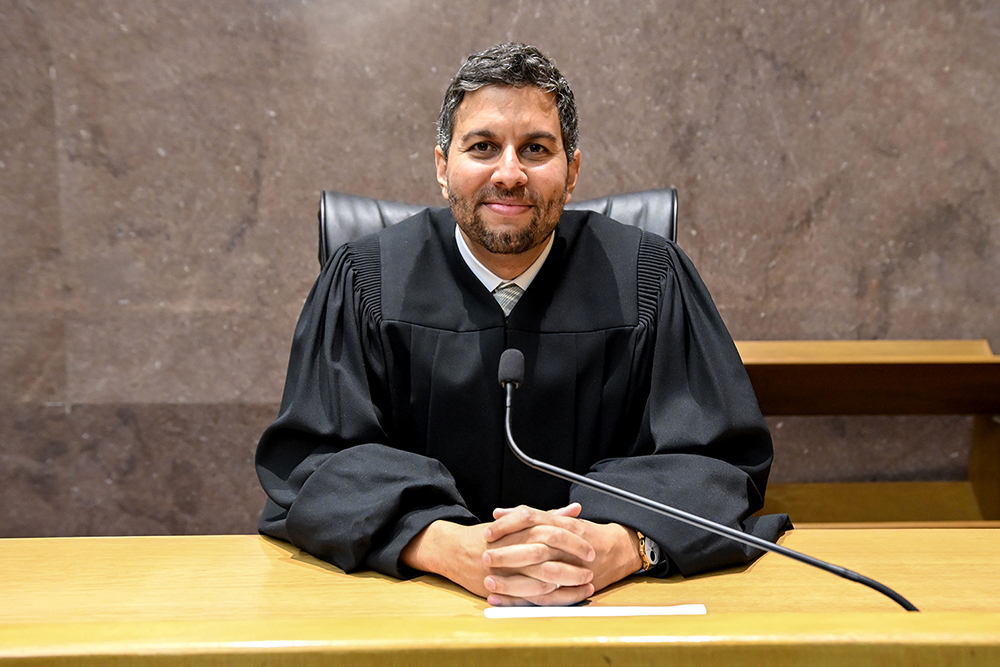
Judge Amir H. Ali
Individual Rules, Standing Orders & Policies
- Rules last changed:

Limits & Logistics
Courtesy Copies
All filings
- Upon request

Adjournments
- Extensions or continuances require a motion; stipulations alone are insufficient.
- Untimely motions for extension or continuance must include an explanation for non-compliance with the four-day notice rule.
Request must include
- Extension/continuance motions must be filed at least 4 days before the deadline, show good cause, and include specified content.

Communication
Chambers
Phone
Clerk
Phone
Chambers
Document Filing Requirements7 rules
Machine summary. Not checked yet.Mandatory?
Any amended pleading shall be accompanied by a redline comparing it to the otherwise operative pleading.
Summary: Amended pleadings must include a redline comparison to the prior operative pleading.
Document Type
Amended Pleading
Machine summary. Not checked yet.Mandatory?
The joint meet-and-confer report in cases subject to Local Civil Rule 16.3(d) must address all matters listed in Federal Rule of Civil Procedure 26(f)(2) & (3) and Local Civil Rule 16.3(c). It must also include: (i) a brief statement describing the nature of the case and the statutory basis of the Court’s jurisdiction for all causes of action and defenses; and (ii) a proposed scheduling order in accordance with Local Civil Rule 16.3(d).
Summary: The joint meet-and-confer report must address FRCP 26(f) and Local Rule 16.3(c) matters, include a case description and jurisdictional basis, and attach a proposed scheduling order.
Document Type
Joint Meet And Confer Report
Machine summary. Not checked yet.Mandatory?
The Court will summarily deny motions that are subject to Local Civil Rule 7(m) but do not contain the requisite statement.
Summary: Motions subject to Local Civil Rule 7(m) must contain the requisite statement or will be summarily denied.
Document Type
Motion
Machine summary. Not checked yet.Important?
record, counsel for the parties shall jointly prepare and submit a report to the Court, within fourteen days after any defendant files an answer, proposing a schedule for the filing of the certified list of the contents of the administrative record and any motions.
Summary: Parties must jointly submit a scheduling report within 14 days after any defendant files an answer in APA cases.
Document Type
Report
Machine summary. Not checked yet.Important?
In cases arising under the Freedom of Information Act ("FOIA"), 5 U.S.C. § 552, the parties shall jointly submit a report to the Court within fourteen days after any defendant files an answer addressing the status of Plaintiff's FOIA request, including the anticipated number of documents responsive to the request and the anticipated date(s) for release of the requested documents.
Summary: Parties must jointly submit a FOIA status report within 14 days after any defendant files an answer.
Document Type
Report
Machine summary. Not checked yet.Important?
Every motion, opposition, or reply that is ten pages or longer must have a Table of Contents.
Summary: Motions, oppositions, and replies of 10 pages or more must include a Table of Contents.
Document Type
Motion
Machine summary. Not checked yet.Important?
If the case settles, in whole or in part, Plaintiff's counsel must promptly file a notice with the Court.
Summary: Plaintiff's counsel must promptly file a notice of settlement with the Court when the case settles.
Document Type
Notice Of Settlement
Filing & Service rules
Electronic Filing Rules
Pro se litigants must file documents in paper form; electronic filing is not available to them.
In cases where a litigant proceeds pro se, electronic filing procedures generally apply only to parties who have counsel. Absent separate order of the Court, the party appearing pro se shall file documents in paper form with the Clerk’s Office.
Machine summary. Not checked yet. · Civil cases
Page 2 | Filing Guidelines
Attorneys must file documents electronically.
In cases where a litigant proceeds pro se, electronic filing procedures generally apply only to parties who have counsel.
Machine summary. Not checked yet. · Civil cases
Page 2 | Filing Guidelines
Filing Timing and Cure Windows
Parties must file the joint meet-and-confer report within 30 days after any defendant answers.
The parties must meet, confer, and file the joint report required by Local Civil Rule 16.3(d) within thirty days after any defendant has answered
Machine summary. Not checked yet. · Civil cases
Page 2 | Meet-and-Confer Report
If no answer has been filed and Rule 12(b) motions are pending, the joint report is due 14 days after resolution of those motions.
if no party has answered and dispositive motions have been filed under Federal Rule of Civil Procedure 12(b), within fourteen days after resolution of dispositive motions.
Machine summary. Not checked yet. · Civil cases
Page 2 | Meet-and-Confer Report
Opposition to extension/continuance motions must be filed by 5:00 PM the next business day, or the motion may be deemed conceded.
A party opposing a motion for extension or continuance who wants their reason for opposition to be considered must file their opposition by 5:00 PM of the business day after the motion is filed. If no explanation is provided to the Court by this time, the motion may be deemed conceded.
Machine summary. Not checked yet. · Civil cases
Page 5 | D. Opposition
Service and Proof of Service Rules
Service on pro se parties must be in paper form.
Parties with counsel must serve documents upon pro se parties in paper form.
Machine summary. Not checked yet. · Civil cases
Page 2 | Filing Guidelines
Courtesy Copy Requirements
Courtesy copies should not be provided unless requested by the Court.
Counsel should not provide courtesy copies of filings to chambers or the Court. If the Court believes courtesy copies would be helpful, it will let the parties know.
Machine summary. Not checked yet. · Civil cases
Page 2 | Filing Guidelines
Sealing & Redaction Procedures
Protective order designations alone do not justify sealing; parties must confer and include Hubbard factor analysis in the motion to seal.
A party may not file a document under seal by relying solely on designation under a protective order. Even when a protective order has been entered, the Court has a responsibility to determine whether filings should be made available to the public by applying United States v. Hubbard, 650 F.2d 293 (D.C. Cir. 1980). A party moving to file under seal materials subject to a protective order must confer with the opposing party and state their position in the motion to seal, along with analysis of the relevant Hubbard factors.
Machine summary. Not checked yet. · Civil cases
Page 4 | Motions
Motions to seal must include a redacted public version; if full sealing is needed, the party must notify the Court at filing.
Any party that files a motion to seal must also submit a redacted version of the document it proposes to seal, suitable for filing on the public docket. If a party believes that all portions of a document must remain sealed, the party must specifically notify the Court of that belief at the time of filing the motion to seal.
Machine summary. Not checked yet. · Civil cases
Page 4 | Motions
Pre-Motion Conference Requirements
Court leave is required before filing any discovery motion; failure to comply may result in the motion being stricken.
Counsel shall not file any discovery-related motion without obtaining the Court's leave, after conducting the required in-person or video meeting with opposing counsel and making the joint request for a teleconference. Failure to comply with this requirement may result in any such motion being stricken.
Machine summary. Not checked yet. · Civil cases
Page 3 | Discovery Disputes
Parties must meet in person or by video before bringing a discovery dispute to the Court.
Before bringing a discovery dispute to the Court's attention, the parties shall confer in person or by video to attempt to resolve the dispute.
Machine summary. Not checked yet. · Civil cases
Page 3 | Discovery Disputes
Adjournment & Extension Requirements
Extension/continuance motions must be filed at least 4 days before the deadline, show good cause, and include specified content.
A motion for extension or continuance must be filed at least four days before the current deadline and must include good cause to support the additional time being asked for. The motion shall state: i. the original date that the motion is seeking to extend or have continued; ii. the number of previous extensions of time or continuances granted to each party; iii. the good cause supporting the motion; iv. the effect, if any, that the granting of the motion will have on existing deadlines; v. for motions, suggested deadlines (reached in consultation with the opposing party) for the filing of any opposition and reply papers; for continuances, three alternative dates and times that are convenient to all parties; and
Machine summary. Not checked yet. · Civil cases
Page 4 | Motions to Extend Time or Reschedule Hearings
Extensions or continuances require a motion; stipulations alone are insufficient.
An extension to file a document or continuances of a proceeding will be granted only upon motion, and not upon stipulation by the parties.
Machine summary. Not checked yet. · Civil cases
Page 4 | Motions to Extend Time or Reschedule Hearings
Untimely motions for extension or continuance must include an explanation for non-compliance with the four-day notice rule.
Untimely motions for an extension or continuance must include an explanation for the failure to comply with the four-day rule.
Machine summary. Not checked yet. · Civil cases
Page 5 | C. Untimely Motions
Chambers Communication Rules
Telephone contact with chambers is prohibited except for emergencies; parties must communicate via formal filings, not letters.
Except as authorized by this order, parties may not contact chambers by telephone. Parties are to communicate with the Court by written motion, opposition, reply, or notice, and not by letter. Chambers will not provide information on scheduling or the status of any pending motion or provide legal advice of any kind. If an extraordinary circumstance or emergency requires it, counsel can contact chambers jointly via telephone conference.
Machine summary. Not checked yet. · Civil cases
Page 1 | Communications with the Court
After an unsuccessful meet-and-confer, parties must jointly email chambers to request a teleconference with a description of issues and proposed dates.
If the parties are unable to resolve the dispute after their conference, they shall jointly send an email to the Court at Ali_Chambers@dcd.uscourts.gov requesting a telephone conference with the Court. The email must provide a clear and concise description of the issues in dispute and shall propose dates and times for a teleconference to resolve the issues.
Machine summary. Not checked yet. · Civil cases
Page 3 | Discovery Disputes
Scheduling inquiries must be directed to the Courtroom Deputy Supervisor by phone, not to chambers directly.
If counsel nevertheless needs to make a scheduling-related inquiry, they shall call the Courtroom Deputy Supervisor (202-870-2867), who will forward the inquiry to the Courtroom Deputy Clerk covering Judge Ali’s chambers.
Machine summary. Not checked yet. · Civil cases
Page 1 | Communications with the Court